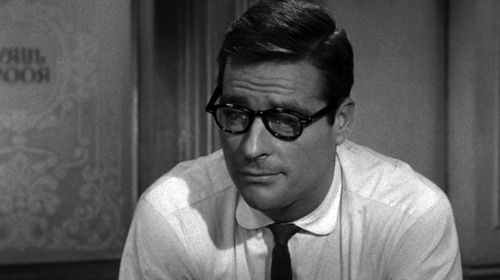
La Haine 1995- Mathieu Kassovitz

La Haine is a drama, in particular a social realism film about real life pride, friendship and social conflict which touches on the themes of police brutality and injustice. The movie was released in 1995 by director Mathieu Kassovitz. The director had a personal for the police and wanted to convey the state of the law enforcement in France, despite that he was unbiased due to in the scene where the police officer was driving the three protagonists from the hospital there was a quote (which I’m paraphrasing) “Not all pigs are bad people”. Despite his hate for the law enforcement the director showed his intention to convey the message about how "hatred breads hate". However, La Haine can be likened to movies such as Spike Lee’s Do the Right Thing due to they have similar themes of police brutality and hate.
The movie tries to convey the dark undertones of Paris that is continuously associated with luxury, love and ‘swarve’ classy characters. The director completely contrasts the conventional way Paris is presented. He shows the characters as people who lack luxury and the posh classy charm associated with the French. The characters such as Vinz is a materially deprived Jewish man, living on an estate housing with his family. He's a Man lacking the ‘swarve,’ classy and gentle character instead he's a man whose confuses aggression for strength and uses it as a way of earning respect and at the end he’s shown how being able to kill doesn't associate with strength.
The director also subverts from the conventional presentation of Paris though his lack of colour in La Haine. The lack of colour symbolises the dark and bleak life of strife and brutality experienced by the lower class youth living in Paris. It used as a device to represent the state of Paris with its police brutality and violence in a negative way. The director intended it to use it to reinforce the messages shown in La Haine which was possibly why he believed showing it with colour wouldn't work as it doesn't give La Haine the atmosphere the director intends to portray.
The director further contrasts it by showing the difference in class between the characters and the conventional French middle class stereotype. This was best done in the scene of the party with the middle class French people. The scene conveyed that the middle class and lower classes in France couldn't associate or understand each other. This lack of understanding led to conflict and created stereotypical perspective which lead to the people in the room acting upon the characteristics they expected to see in people of a different class. Example being the quote "of the estate," also Vinz and Said belief that the girl wouldn't like them due to them being of lower class. This belief or expectation lead to them acting aggressively and bashful towards the girls and causing a disruption at the party. This signifies that the director wanted to convey a message possibly targeted at the middle class and/or police that if you expect a person or people to act in a certain way, for example lower classes people being expected to be thuggish, they could possibly be expected to live up to the expectation also known as a ‘self-fulfilling prophesy’ just as how them being perceived as being thuggish and low lead to them acting it out and trashing the party.

_02.jpg)


.gif)